

The Top Team-Building Activities for Large Groups
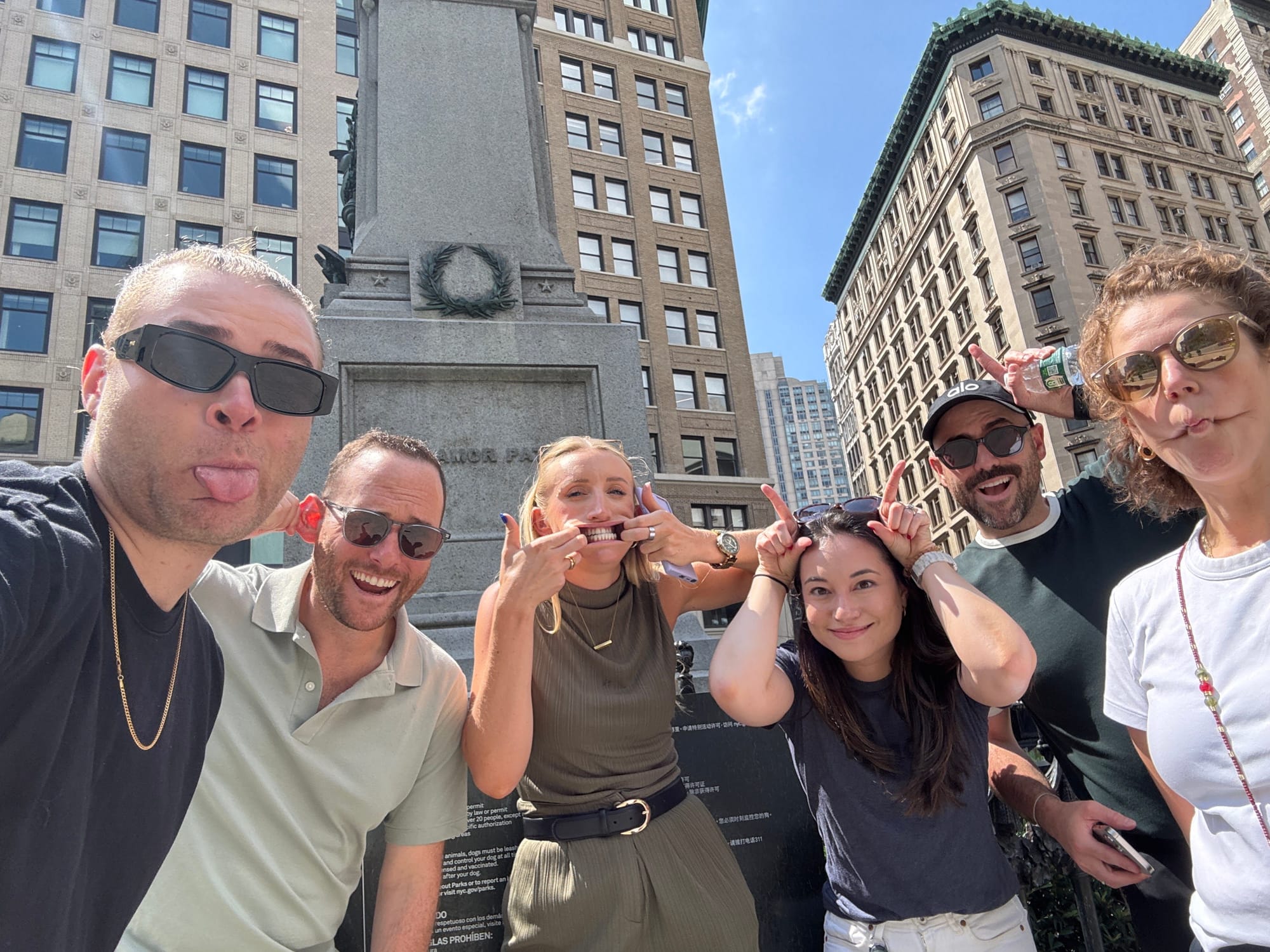
You know how people say don't shrink yourself to fit someone else? That's true for team building too. 😉 If you're a large enterprise group planning a department or company-wide team building event, we want to help you think BIG and execute. With over a decade of experience effectively scaling team-building activities for large groups, we've seen what works at events with anywhere from 100 to thousands of attendees. Here's a rundown of events, stats, and head counts so you can find a fit for your company's next culture-building moment.
The formats that work for 100+ people
A cooking class can hold forty people. An arcade bar might fit 100. Over 100 people, and we need to start thinking more out-of-the-box in terms of entertainment and venue. The formats that we've seen work share three things in common.
1️⃣ They don't depend on one facilitator in one room, so they are able to shape shift to fit the size of the group, no matter how big it gets.
2️⃣ They keep logistics simple. It's frustrating for everyone involved to have to rent multiple busses or deal with long check-in lines. Keeping your group on campus during a work day or near your offsite home base removes a lot of friction.
3️⃣ Our rule is that everyone should be engaged. If you're playing, you should be having fun. If you're spectating, it should be fun to watch. To achieve this, we break large groups into smaller teams, so even when there are thousands of people, everyone's involved.
Here are some activities for large corporate groups that we've seen deliver on all three.
1. A campus-wide scavenger hunt
A corporate scavenger hunt is a chef's kiss format of large-group team building because of its scalability, and the format we know best at Handstand.

Typically, a group of 100+ gets broken down into smaller teams of around 5 people. While it depends on the exact format of the game, teams will solve riddles and challenges that lead them around an area. That area can be a city or a company campus. Our Hunts in particular are 2-hour games hosted in a native iOS and Android app. Throughout the game, players can see the countdown and live leaderboard, which adds fuel to the healthy competition fire.
Pro tip: For large groups over 150+, we recommend a campus whenever possible in order to cut down on transport, and to make the Hunt feel even more personal for your employees.
What a large corporate scavenger hunt looks like
A Hunt for 250 participants
Stripe asked us for something exceptional on their Oyster Point campus, so we built The Lost Pearl of Oyster Point, a pirate adventure with immersive actors, cryptic maps, custom-etched nautical wheels, and buried treasure.
We wove Stripe lore and local history throughout the content as well, making the experience all that much more unique. Stripe employees rated the Hunt 9.5/10 with an NPS of 72, and 100% of surveyed players wanted future events.
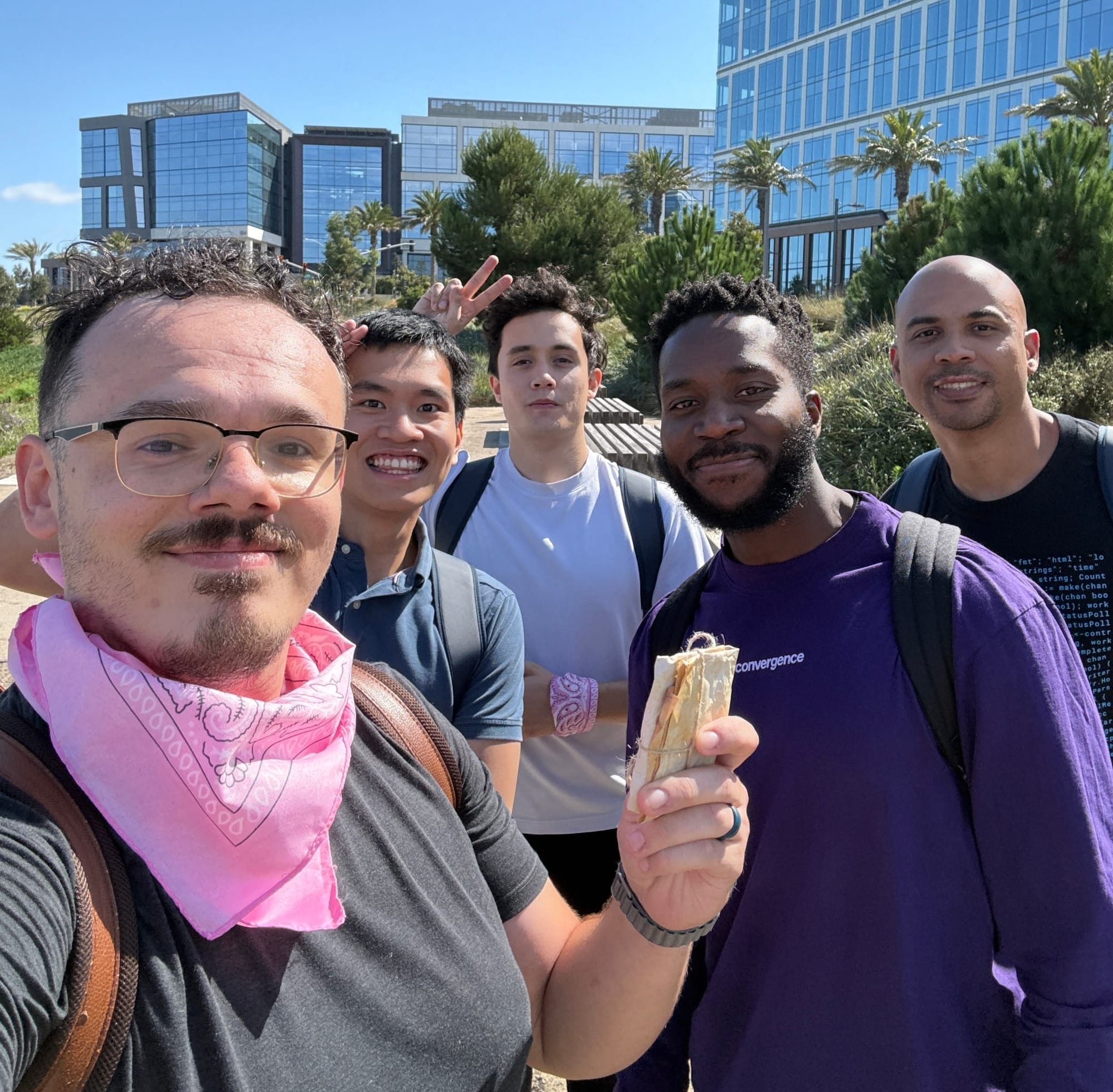
A Hunt for 1,500 participants
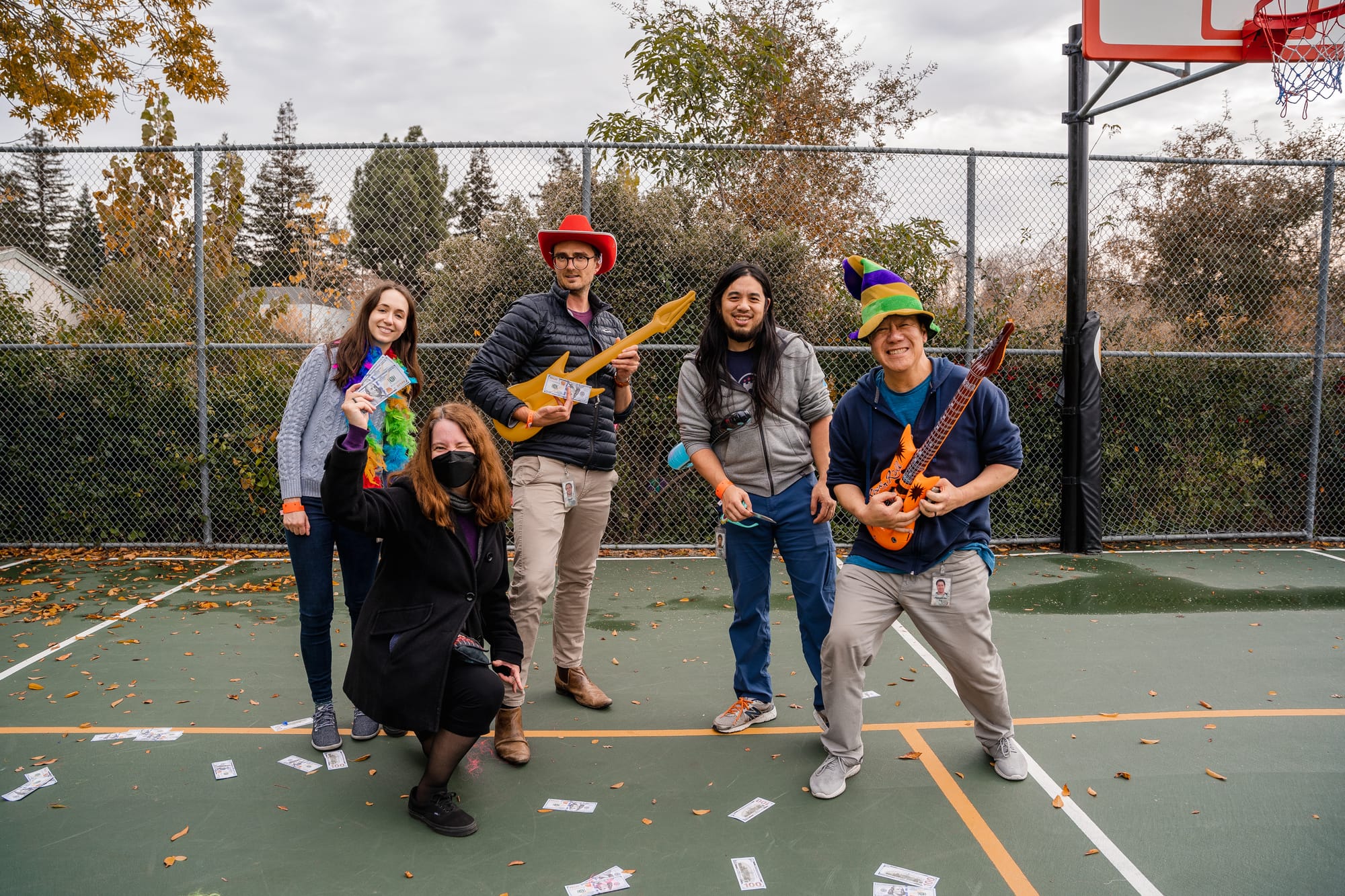
We ran a campus-wide custom Hunt for the Google Assistant team as an end-of-year celebration. The Great Assistant Hunt featured immersive characters, interactive challenges, and a collaborative art finale for roughly 1,500 employees. After racking up a combined 107.2 miles, Googlers rated it 9.4/10 on average with a 72 NPS score.
How much does a corporate scavenger hunt cost?
A standard corporate scavenger hunt with Handstand starts at $1,500 for groups up to 30, and scales from there. More people, more customization, more fun. We'll be able to give you a solid number once you request a quote and share some details about your event!
2. A real-life Mario Kart race
For groups looking for energymaxxing, we highly recommend turning your campus into a racetrack.
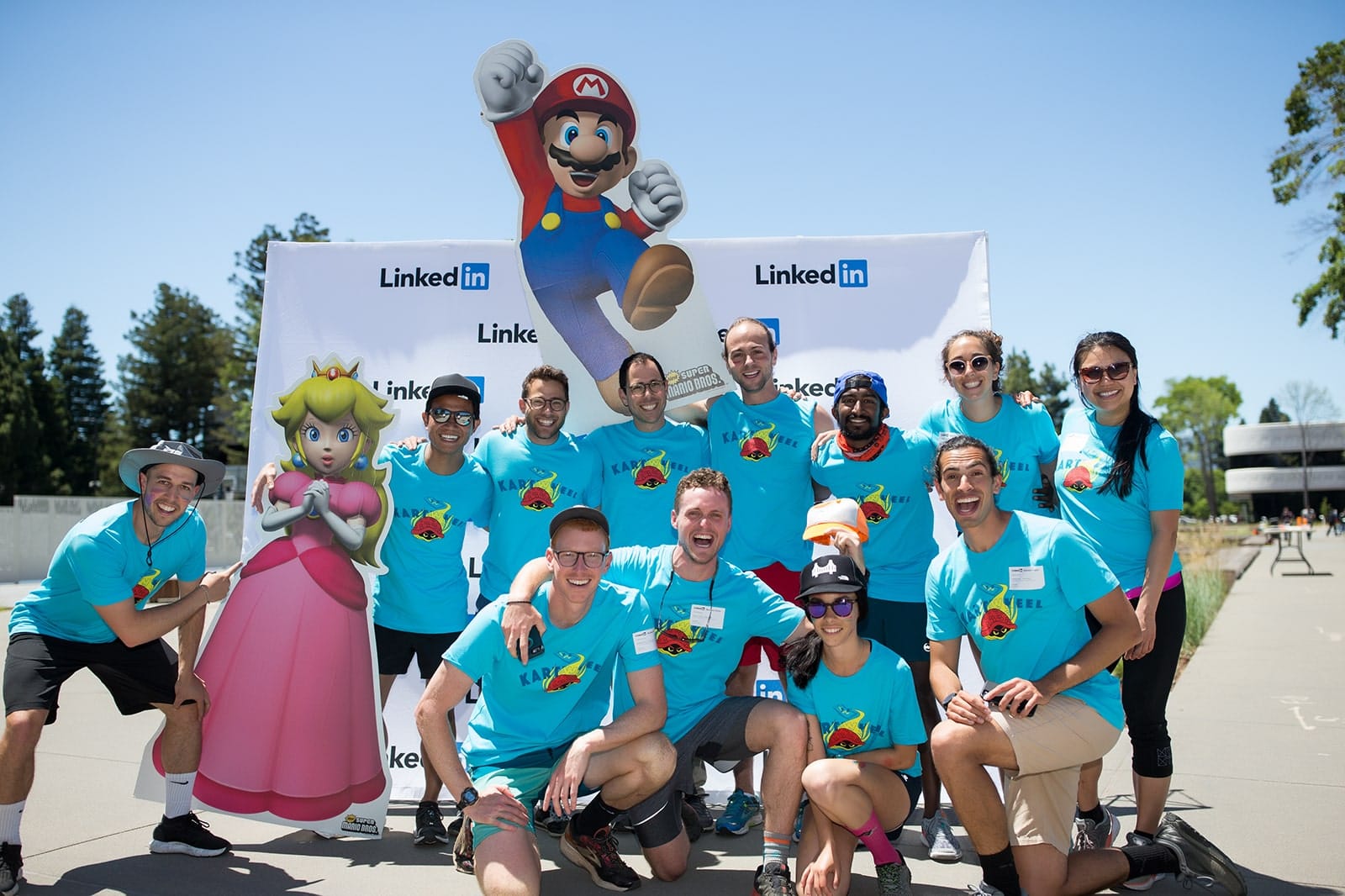
We turned LinkedIn's Sunnyvale campus into a Mario-Kart inspired competition with Kartwheel. Over 400 racers ran around while flinging digital items at coworkers in a custom-built app. They could grab power-ups and even open up new race modes. The group logged 216 laps and 54 cumulative miles, and rated it 9.5/10.
Races work at scale for the same reason Hunts do. First off, with an app as the enforcer, there's no facilitator bottleneck. Secondly, there is natural competition that keeps participants locked in and engaged with their team.
3. A Field Day competition
Past 100 people, a Field Day event can seem intimidating to organize. However, in our experience, Field Day experiences can scale when you efficiently rotate cohorts through stations and introduce centralized scoring.
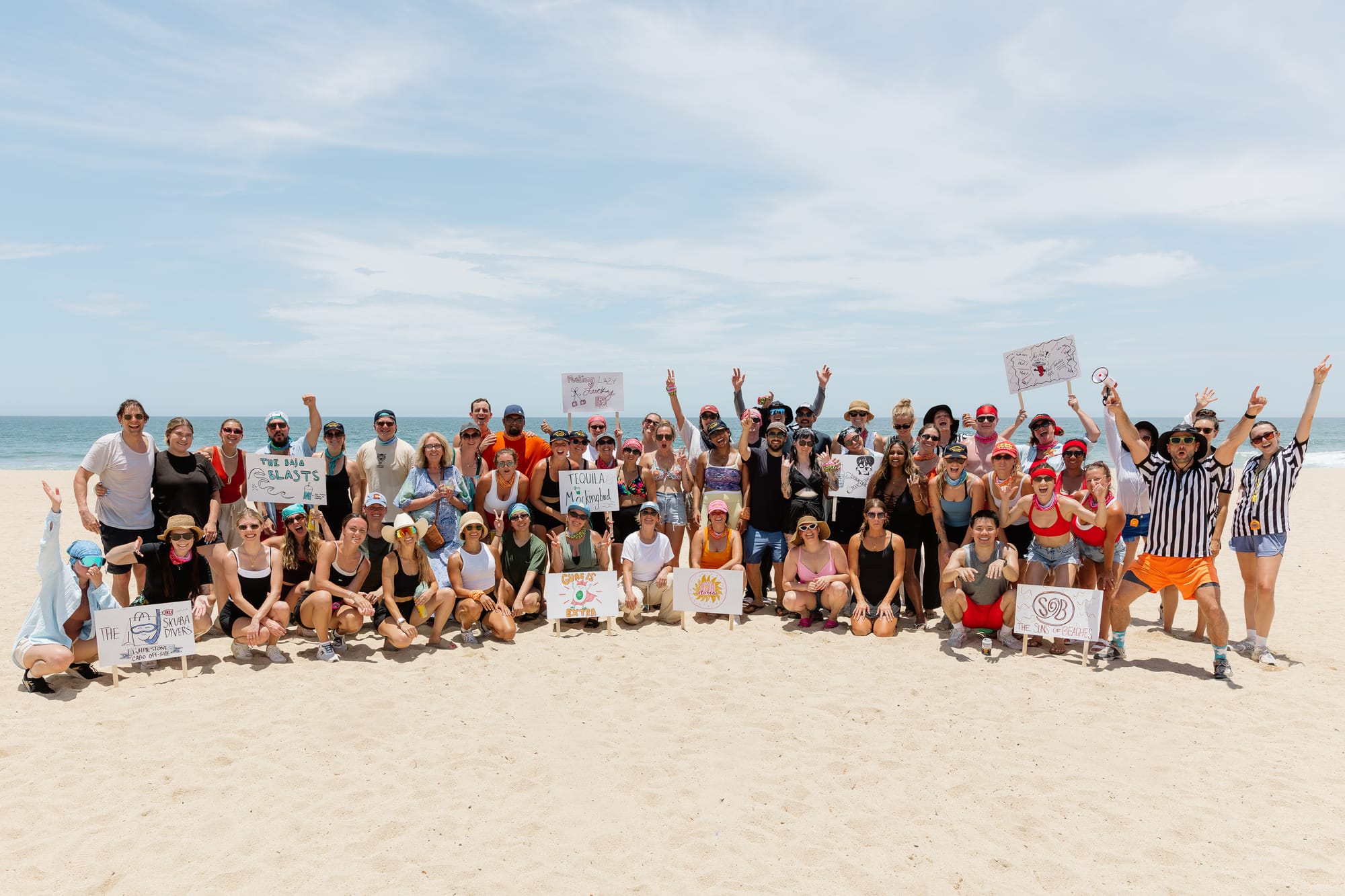
For example, at Whitestone's offsite in Cabo, we built the Cabo Cup, a Survivor-inspired Field Day competition. Seventy players were split into 13 teams. Those 13 teams were divided up into four cohorts which rotated through custom challenges together. Despite being split into cohorts, they were graded with a rank-based scoring system that kept every team competing against each other.
Field Day can scale from 50 to 450 people!
4. A gamified conference or all-hands
If you're already gathering everyone for a summit, the highest-leverage move is gamifying the whole event.
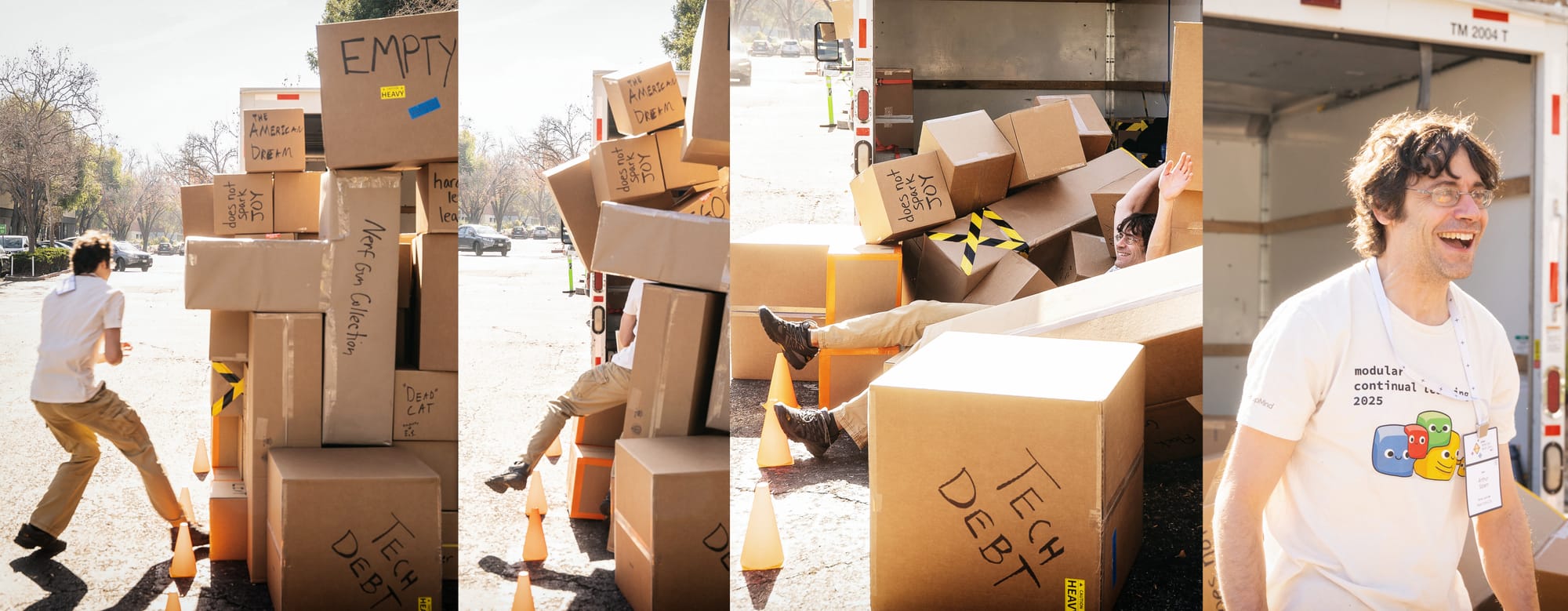
For a Google DeepMind multi-day summit for 3,000 people, we built Townsville, a fictional town spanning four themed neighborhoods. The game included:
- 100+ custom quests
- Daily published newspapers (real newspapers, remember those?)
- Immersive actors
- Larger-than-life puzzle installations including a custom-wrapped Uhaul and puzzles built into a vintage 1954 Ford F100 truck
Throughout the week, summit attendees used their time before work, in between meetings, and before bed to complete riddles and run around campus. Overall, there were 1,073 participants over 4 days, 3,514 puzzles solved, and it earned a 9.6/10 average rating.
The design rule that made it work for a huge crowd? Anyone who walked by a character or physical installation and was curious could start playing immediately. Most did!
5. A hybrid game that connects remote employees
Enterprise groups are usually spread out across the globe. That can make "team building" and aligning culture across the company a challenge. Here are some solutions we've built when the ask was "connect our team, but our team is everywhere."
A. LinkedIn wanted their company kickoff to reach 3,000 employees at once.
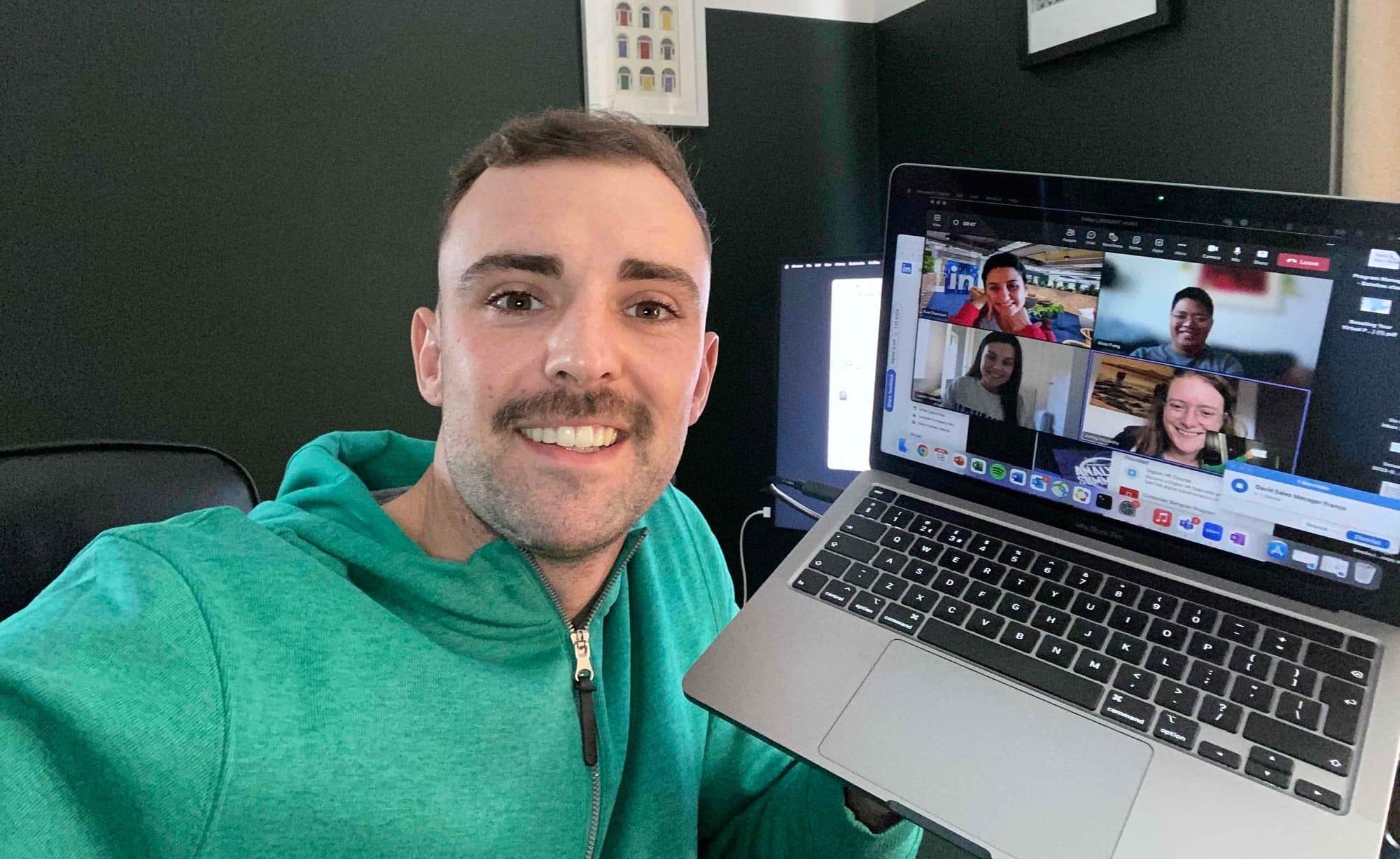
We built a week-long global challenge with physical, intellectual, and creative tasks tied to each day's keynote content, played through a native mobile platform.
Employees racked up 2,120 challenge solves, and participation climbed daily from word of mouth. Overall, it earned a 8.6/10 rating from the 3,000-person crowd.
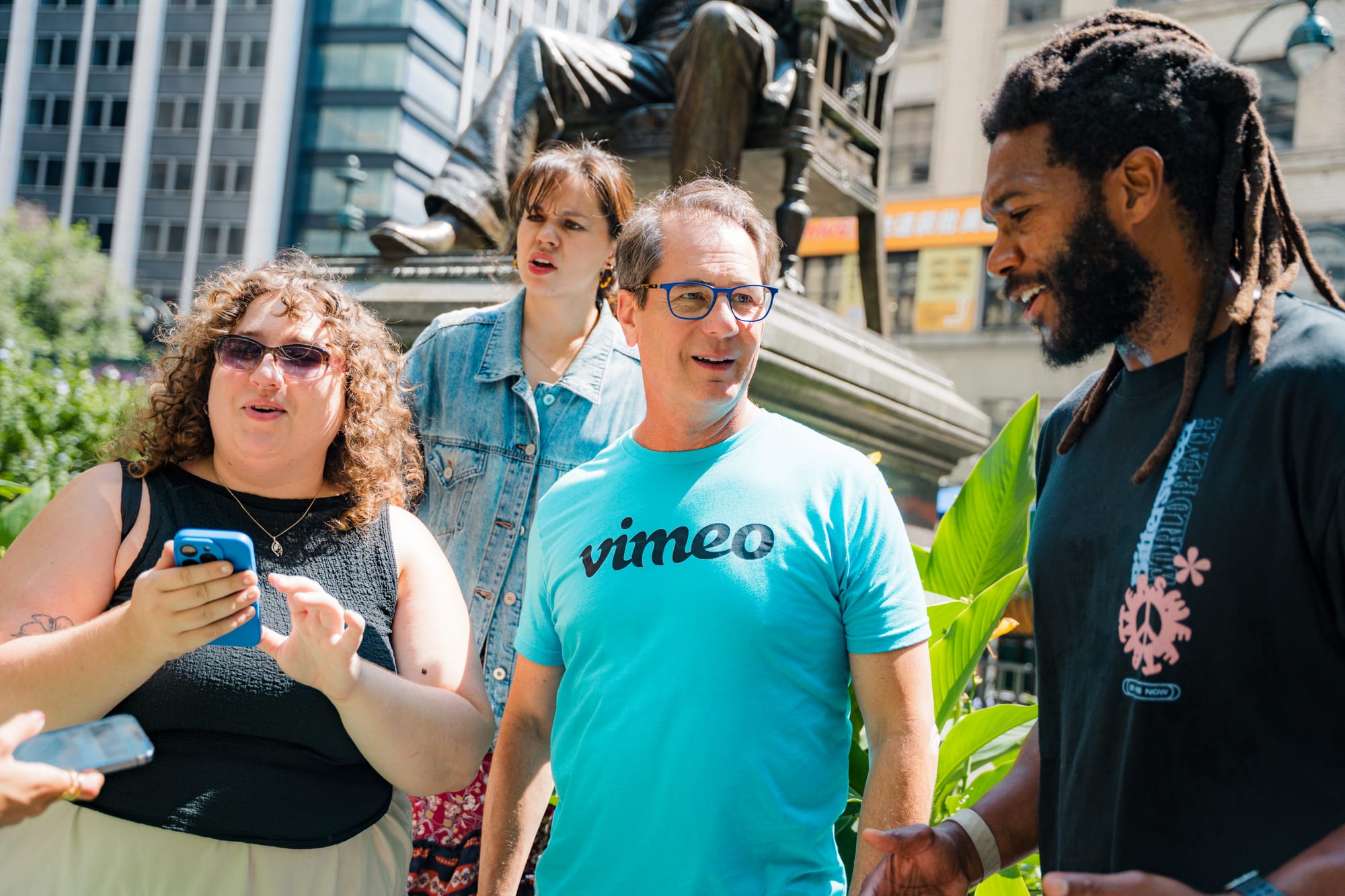
B. Vimeo wanted something that would build bonds between thousands across the world and reflect the company's creative identity.
The challenge? It needed to be delivered as a synchronized surprise across multiple global time zones!
We built The V.I.M.E.O. Hunt: a 6-week rollout culminating in six simultaneous global Hunts for thousands of employees. This Hunt combined our remote Hybrid Hunt format for several regions, with our in-person city scavenger hunt format for NYC and London employees.
It scored a 76 NPS, had the CEO running through the streets, and more than one Vimean said they'd never experienced team building like that before. (We got that in writing!)
C. Google wanted a screen-free reward that would connect 1,000 employees across five global offices at once.
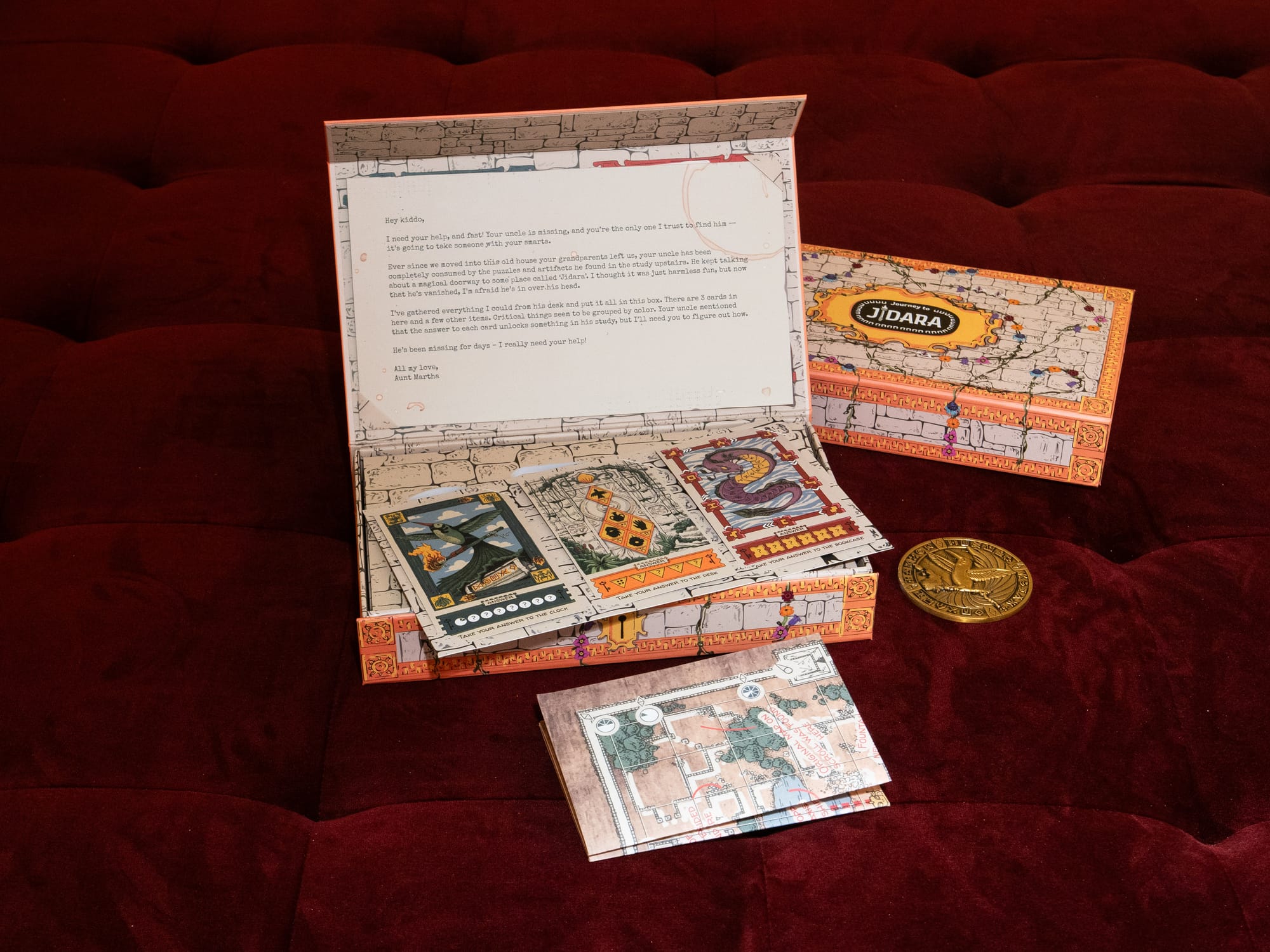
We shipped our premium Journey to Jidara puzzle box to 1,100 desks worldwide. In Mountain View, we installed interactive escape room sets in the office. The entire experience was tied together with a live global leaderboard that connected everyone together. Participants rated it 9.3/10!
6. A volunteering opportunity at scale
Large-format volunteering like bike builds, care-kit assembly, and food-bank packing, is another awesome option for enterprise corporate groups. The one caveat to look out for is the energy and pacing.
If participants show up to have 5 people pack one care-kit, that's not as memorable as gamifying the collection of the care kit items with your team over the span of a few hours.
For large groups, it's far more engaging to make the act of volunteering an event in and of itself.
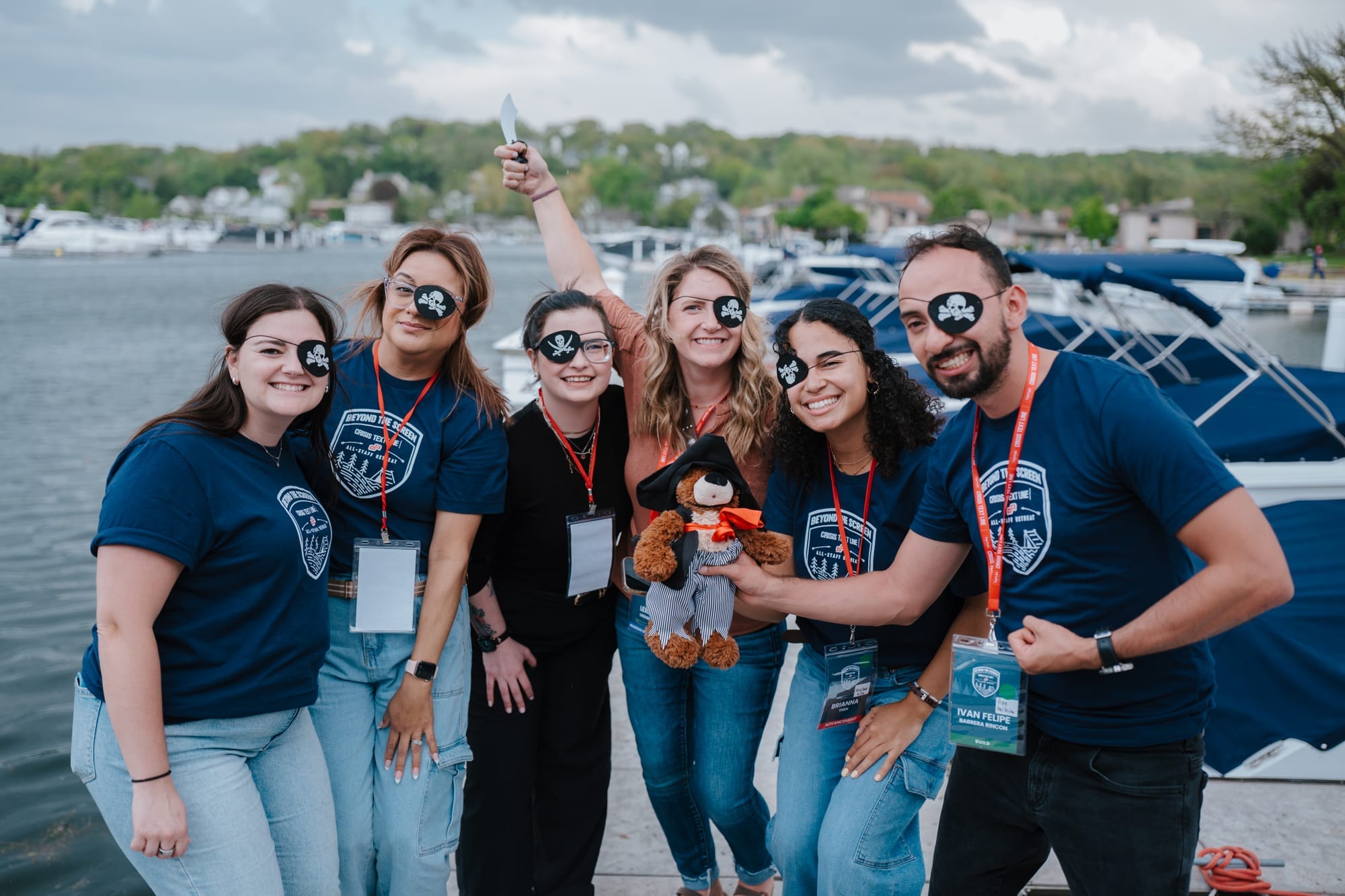
We transformed our Hybrid Hunt format to fit Crisis Text Line's desire for a philanthropic Hunt. Together, they recorded 30+ creative videos featuring stuffed animals, then donated them, along with the videos, to a local Chicago hospital.
7. A trivia or game-show format
This type of event can be a budget option that also scales. A hosted game show with smaller teams, buzzers or phones, and a multiple rounds built from your company's history and inside jokes can hold 500 people in a ballroom for at least an hour.
While it won't get people moving or exploring, this lower-lift option beats another happy hour by a mile.
The capacity question
Ask any vendor this question before you book: "What's the largest group you've run a team-building event for, and can I see how it went?"
Plenty of team-building activity companies say they handle large groups, but to some, large is 200, while to another it's 2,000, and to others it's 20,000.
The design work that makes thousands of people feel engaged instead of lost in the crowd is significant, and you should get insight into their experience before booking.
What does a team-building event for a large group cost?
At baseline, both a Handstand Hunt (in-person) or Hybrid Hunt (virtual) start at $1,500 for groups up to 30. Large groups benefit from per-person economics as headcount grows. The final number depends on format, venue (fully virtual, in the city streets, your company campus), and how much customization you want. More details on Hunt costs are in our guide: how much a corporate scavenger hunt costs.
A Field Day competition starts at $7,000 for up to 50 people and scales to 450.
Our puzzle boxes start at $70/person and can be shipped anywhere your employees are.
Want an experience that's bespoke? Get a quote with your headcount and city, and we'll get in touch to tell you exactly what's possible.
Frequently Asked Questions
What's the largest group Handstand has worked with?
We've run events for enterprise groups of thousands, including a 1,073-person, four-day activation for Google DeepMind's Working Week and a global challenge that reached 3,000 employees for LinkedIn's company kickoff. We've delivered party entertainment for 600 guests. There's no fixed ceiling. The format changes at scale, not the ability to deliver.
What's the best team-building activity for over 100 people?
A campus-wide scavenger hunt is usually the strongest fit past 100 people. It breaks large groups into small teams of around 5, runs on an app to keep logistics smooth, and scales from a few hundred people to a few thousand without losing out on engagement. We've run this exact setup for everywhere from 100 players to thousands. Check out some case studies.
How much does a large-group team-building event cost?
Hunts start at $1,500 for groups up to 30, and large groups get better per-person economics as headcount grows. The final number depends on format, venue, and how much custom design you want.
Can a distributed team spread across multiple offices do a team-building activity together?
Yes. We've connected teams across time zones a few different ways: a week-long mobile challenge tied to daily keynote content for LinkedIn, six simultaneous global Hunts combining our remote Hybrid Hunt format with in-person city Hunts for Vimeo, and a physical puzzle box shipped to 1,100 desks across five global offices for Google.
How long does a large corporate scavenger hunt take?
A standard Handstand Hunt runs about 2 hours, whether it's a small team or a full campus-wide event. Small teams solve riddles and challenges through an app that tracks time and score on a live leaderboard.
Does large-scale volunteering work as a team-building event?
It can, if you build in structure and pacing. A group of people quietly assembling care kits for a few hours isn't very memorable on its own. Gamifying the process, the way we did for Crisis Text Line's philanthropic Hunt, keeps a large group actually engaged instead of just present.
What should I ask a vendor before booking a large group event?
Ask what the largest group they've actually run a team-building event for is, and ask to see how it went. "Large" means 200 people to some vendors and 2,000 to others, and the design work that keeps thousands of people engaged instead of lost in a crowd is significant.



