

How We Built an Interactive Experience for 2,000 People That No One Saw Coming
At Handstand, we design custom interactive experiences that turn ordinary corporate gatherings into exceptional events. They're the kind of experiences that turn a regular holiday party into the thing people are still talking about on Monday morning.
Every engagement brings a new variable: size.
When Google DeepMind asked us to design their 2025 holiday party experience for 2,000 attendees across two nights, the big idea for it came easily. The real challenge was maintaining design control of flow, energy, and overall experience at a scale where small mistakes multiply fast.
The Brief
This was our second year collaborating on Google DeepMind's holiday party celebration, which meant the bar was already high. It also meant we had to deliver something that felt completely fresh.
The result was Studio 37: The Secret Transmission. The premise: a rogue broadcast studio manager hijacked three studio machines and threatened to air his Chaos Manifesto at midnight. Guests had to find the machines, figure out how to reprogram them, and record their session data to stop the broadcast!
The whole thing lived inside Google's party theme, which was a 1970s broadcast studio called Studio 37. We wove The Secret Transmission seamlessly into the celebration with 2,000 attendees across two nights.
What "Custom" Means at Scale
The Secret Transmission was way more than some arcade games we popped down into the venue. Our installations were crafted and fabricated by hand (and tool). For us, that distinction matters. In a world of AI-powered algorithms and chatbot interactions, our experiences are highly human. Every detail we include is intentional, obsessed over, and made with love!
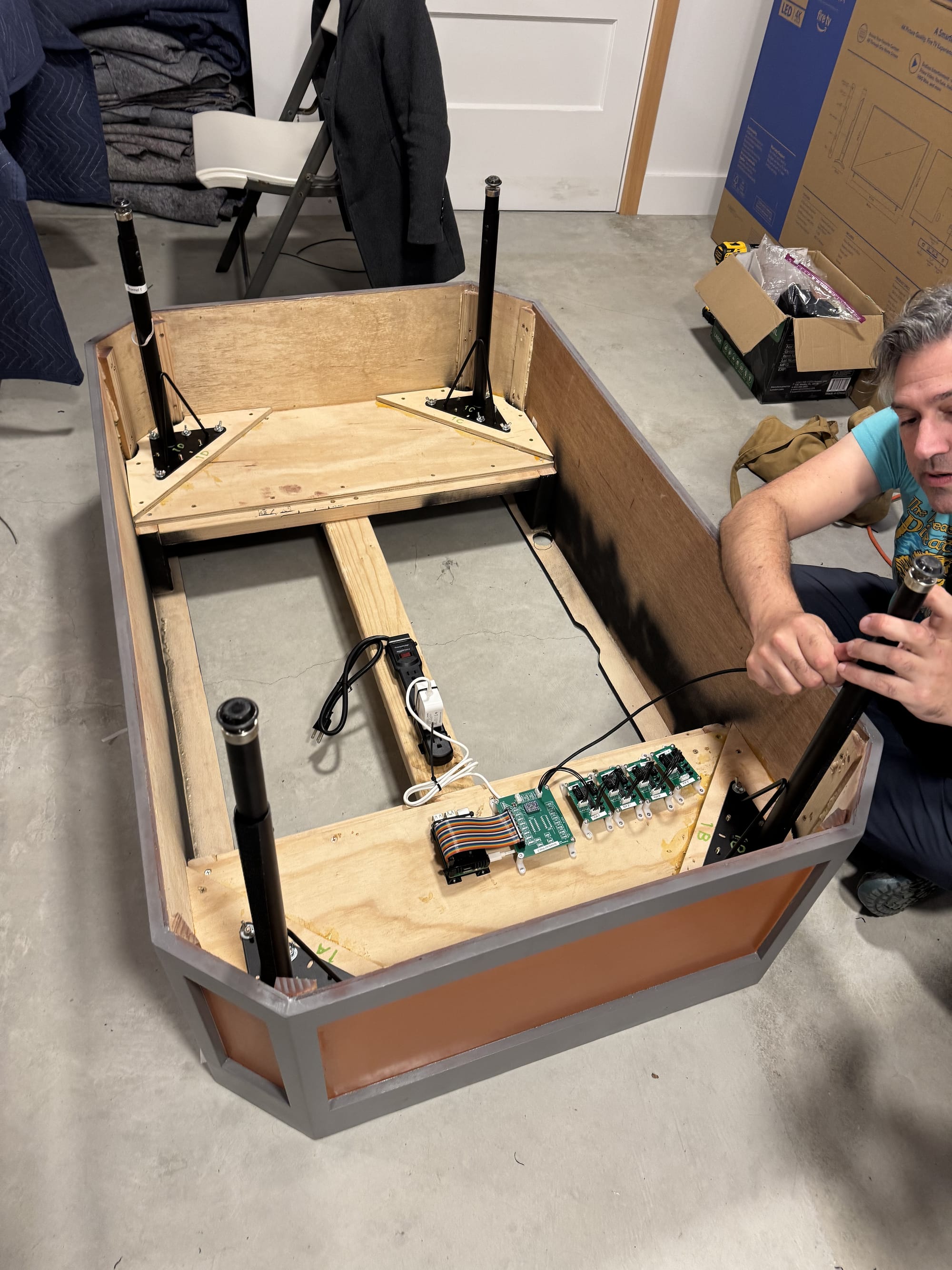
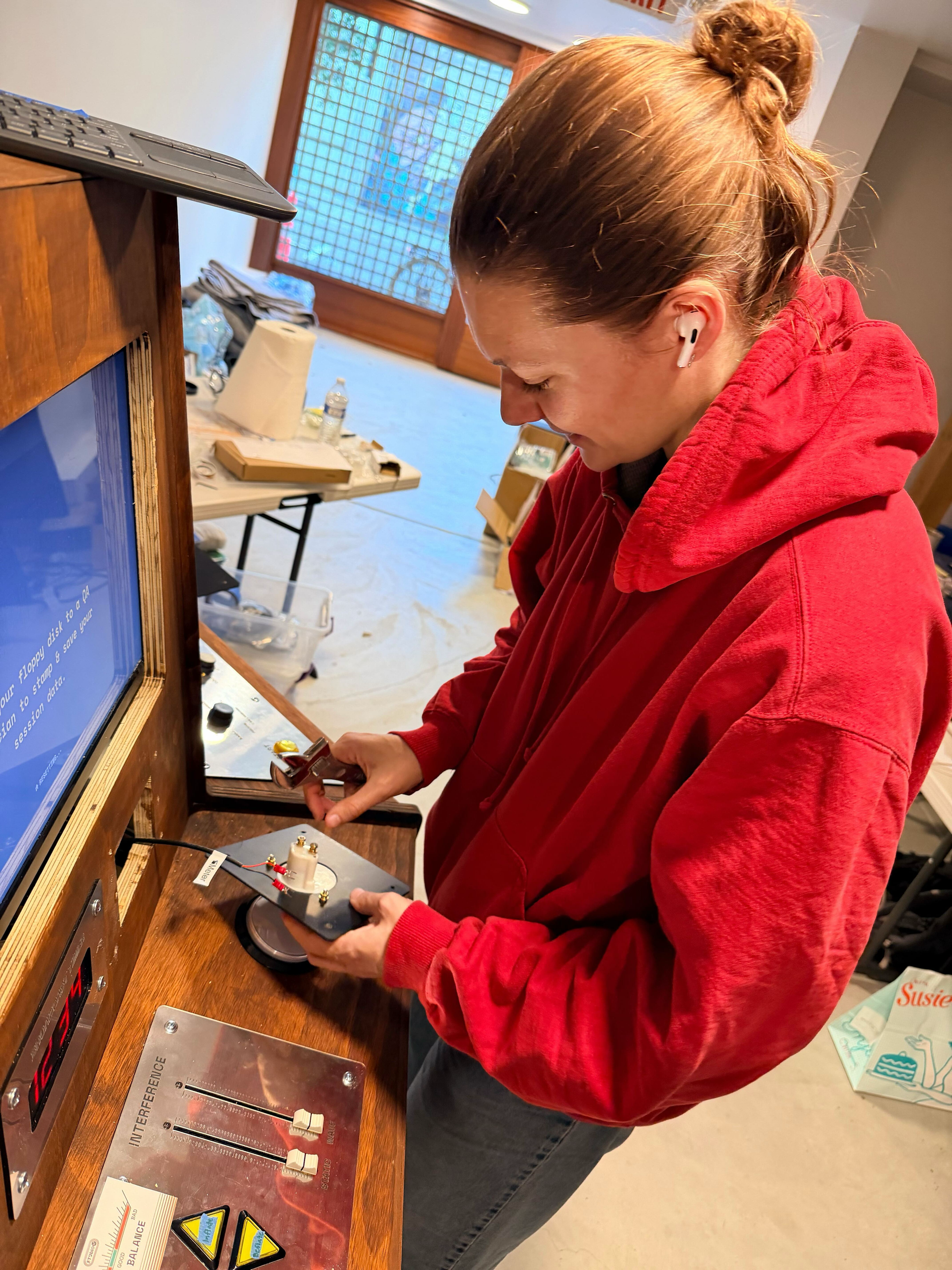
All the details of our designs start in the same way: theme first, then scale. Theme dictates mechanics. Scale dictates durability and throughput logic. And they all have to look beautifully crafted and hold up to hundreds of interactions without losing quality or needing constant staff intervention.
Every decision came back to the same questions: How long should a session take? How many people can engage at once? What happens when someone gets stuck? What does a reset look like halfway through night one?
These are the questions that separate a truly custom experience from one that fades into the background.
To help nail down those answers before the games ever reached the venue, we rented a space in Hayes Valley to finish the prototype builds. Then we opened the doors to playtesters to get unscripted reactions and honest feedback. That's how we polished the rough edges before the guests had the chance to point them out.
Three Puzzle Machines For Three Engagement Profiles
At this scale, one size fits nobody. Some guests want to go deep. Some want a quick win. The best interactive event experiences are designed so that both walk away satisfied.
So we built three installations, each designed for a different kind of player. And because we were designing for 2,000 attendees, we built two complete sets of each — prototyping and playtesting the first, then finalizing the second.
Check out the Behind the Scenes of the full build, then keep reading to dive into each puzzle!
Puzzle #1: The Channel Programmer
– Immersive, nostalgic, transportive –
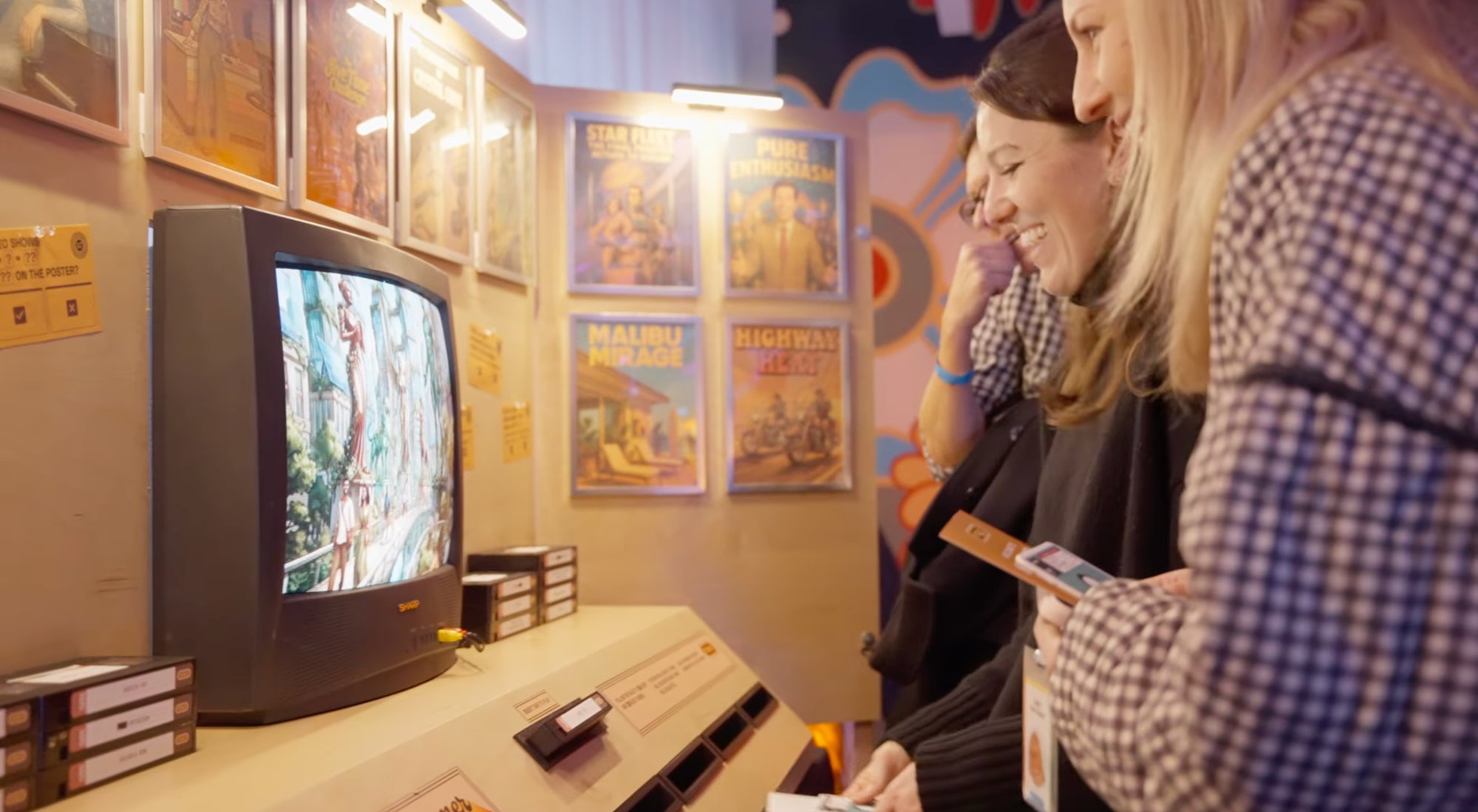
Designer Rich DDT wanted guests to feel like they'd stumbled into 1979 with real VHS tapes, a real CRT TV, and posters for fictional shows.
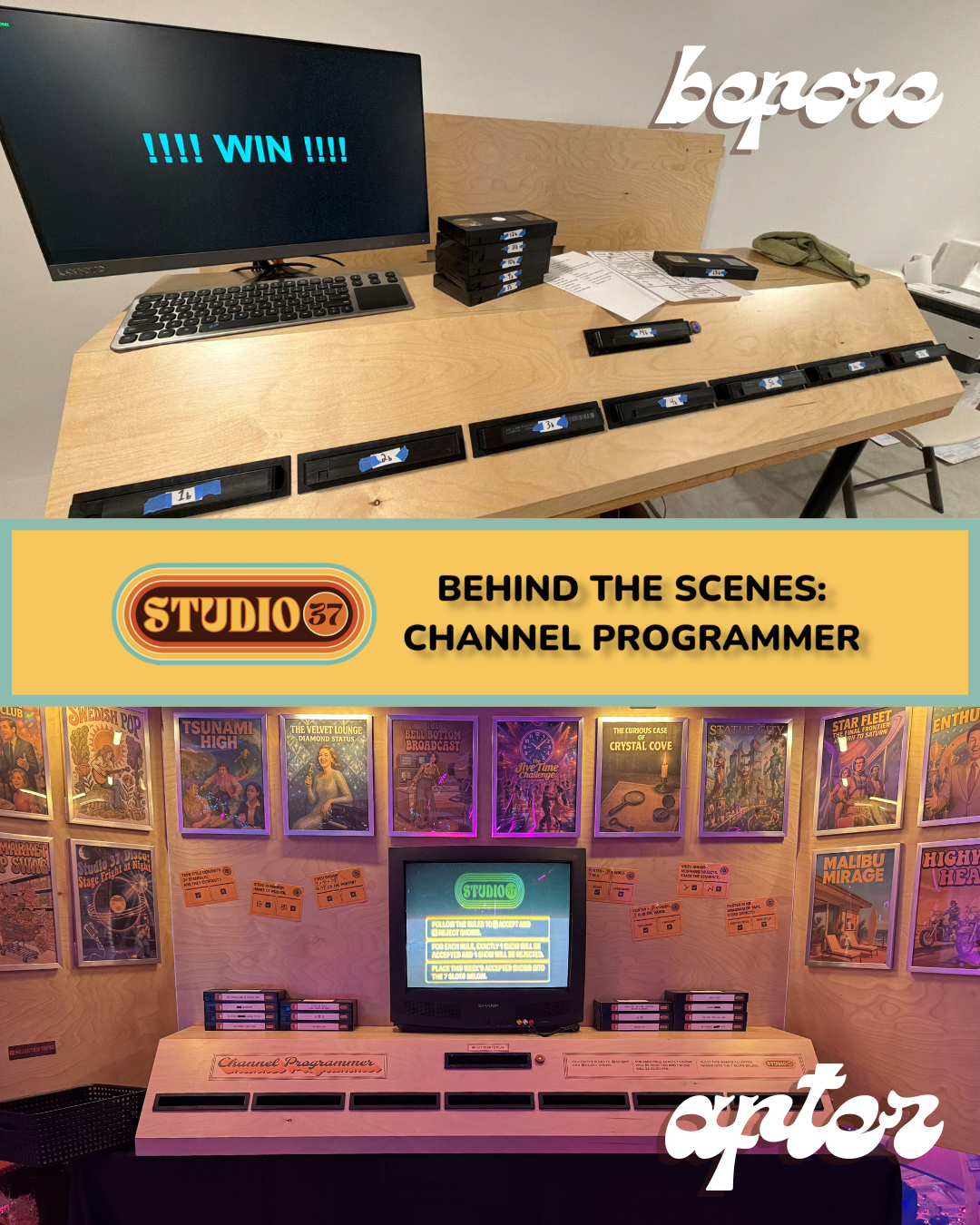
The puzzle was genuinely challenging, but the environment was warm enough that people stayed even when stuck. Onlookers engaged just as much as players. People gathered, watched, and cheered when they finally cracked the logic puzzle.
It was the puzzle with the most micro-engagement — and at scale, that's just as valuable as direct participation.
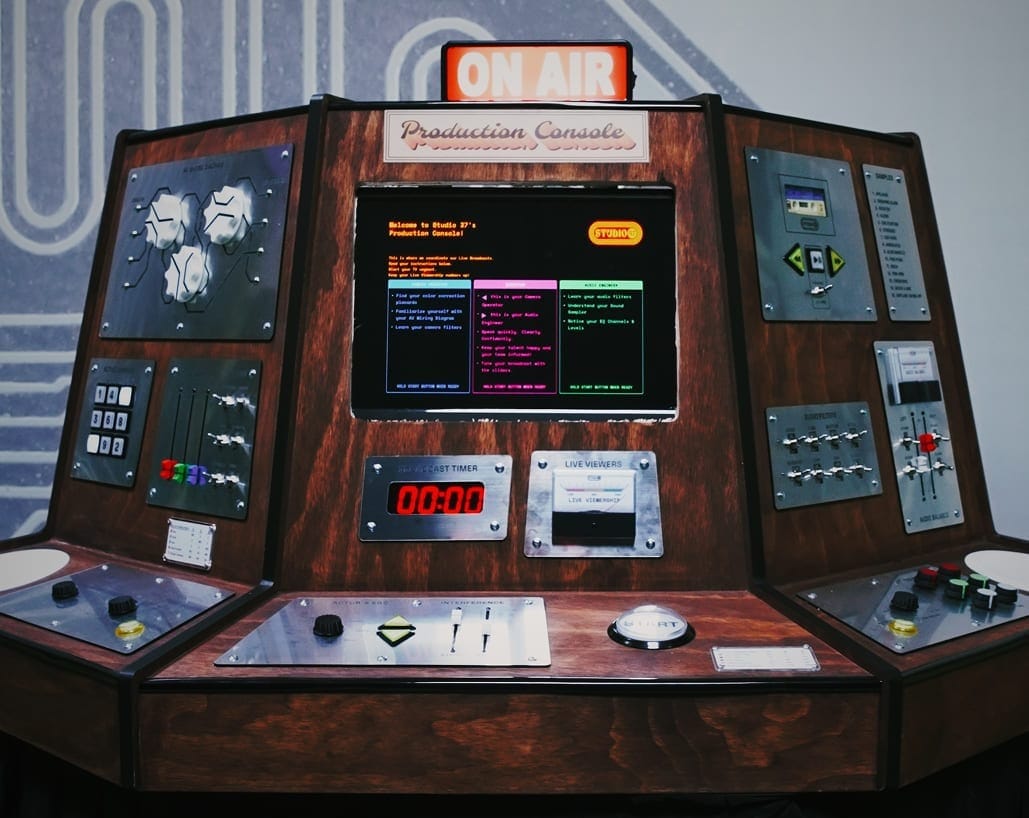
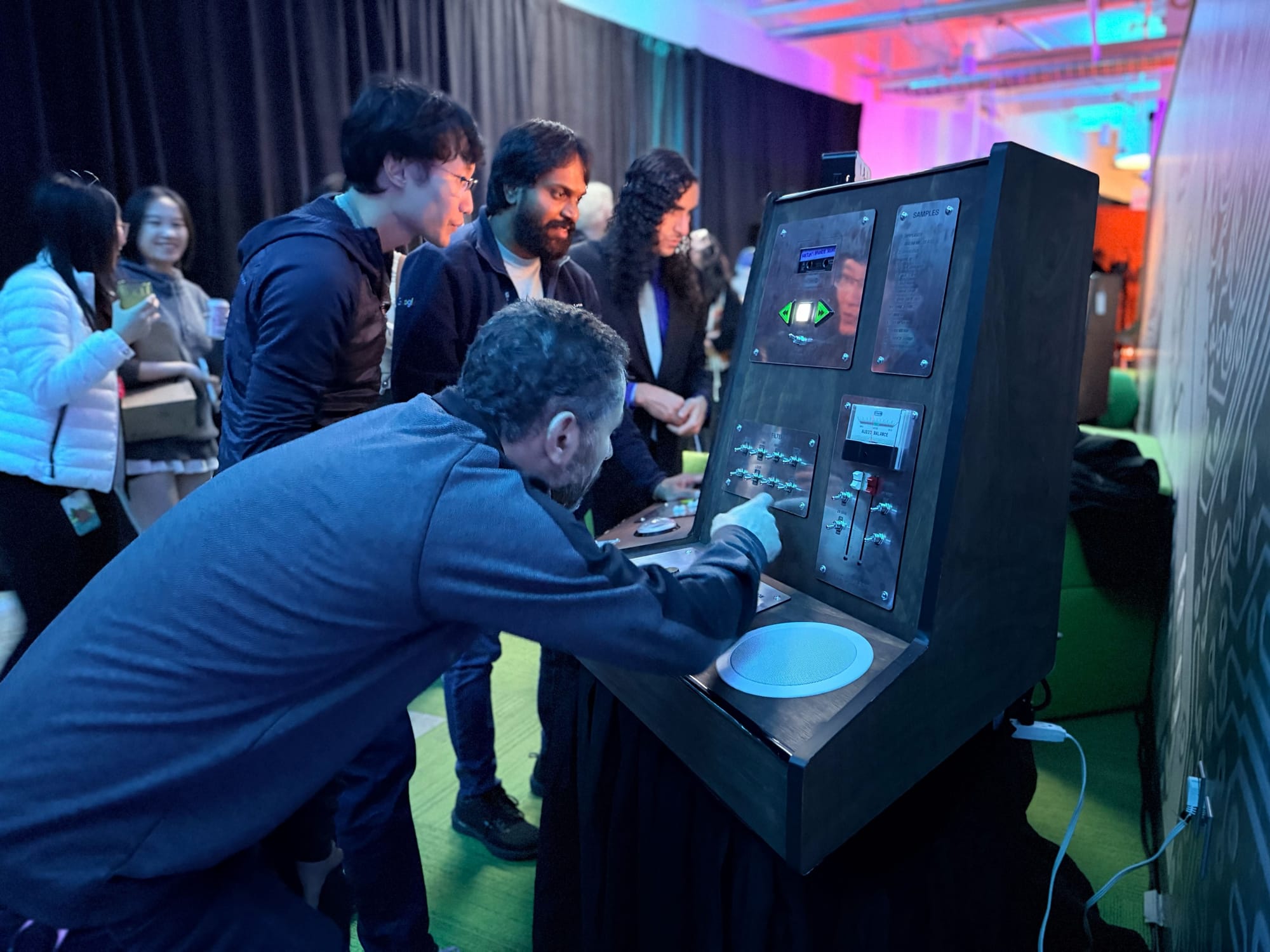
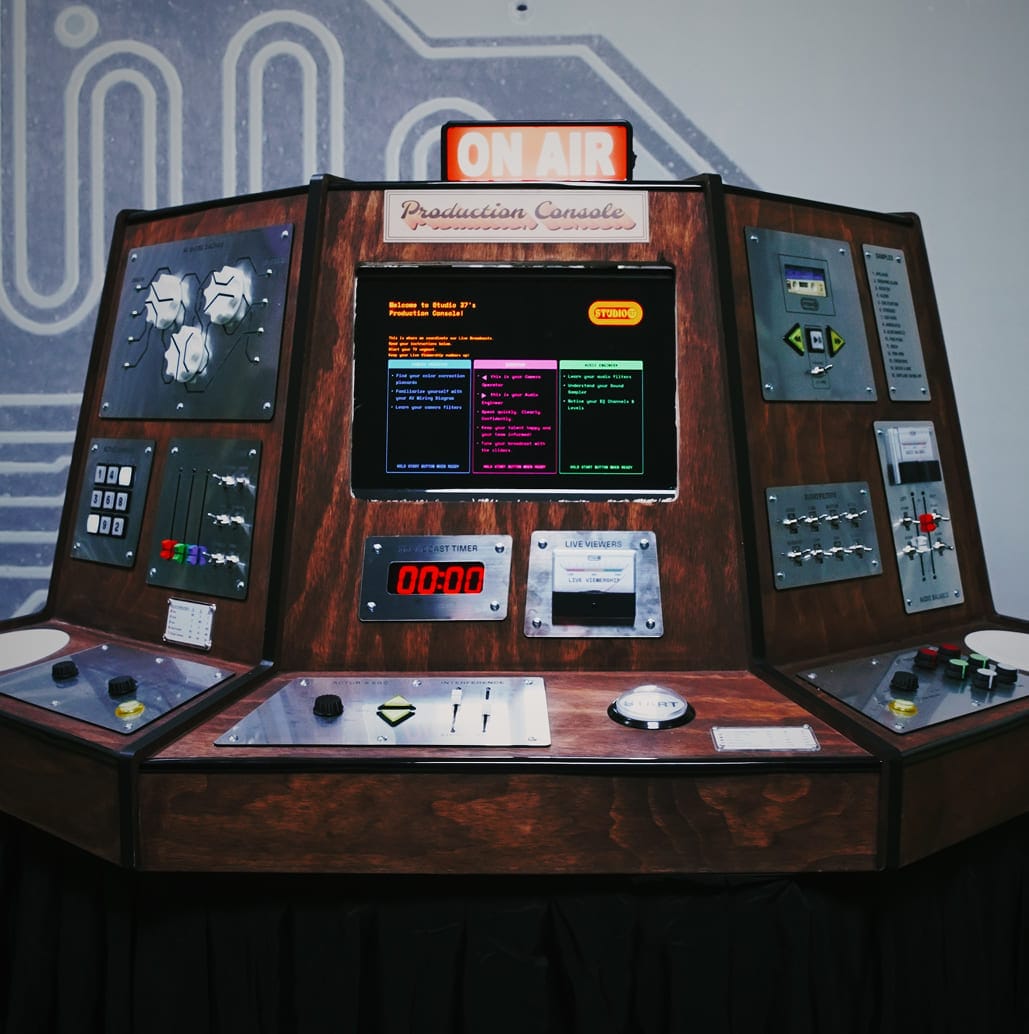
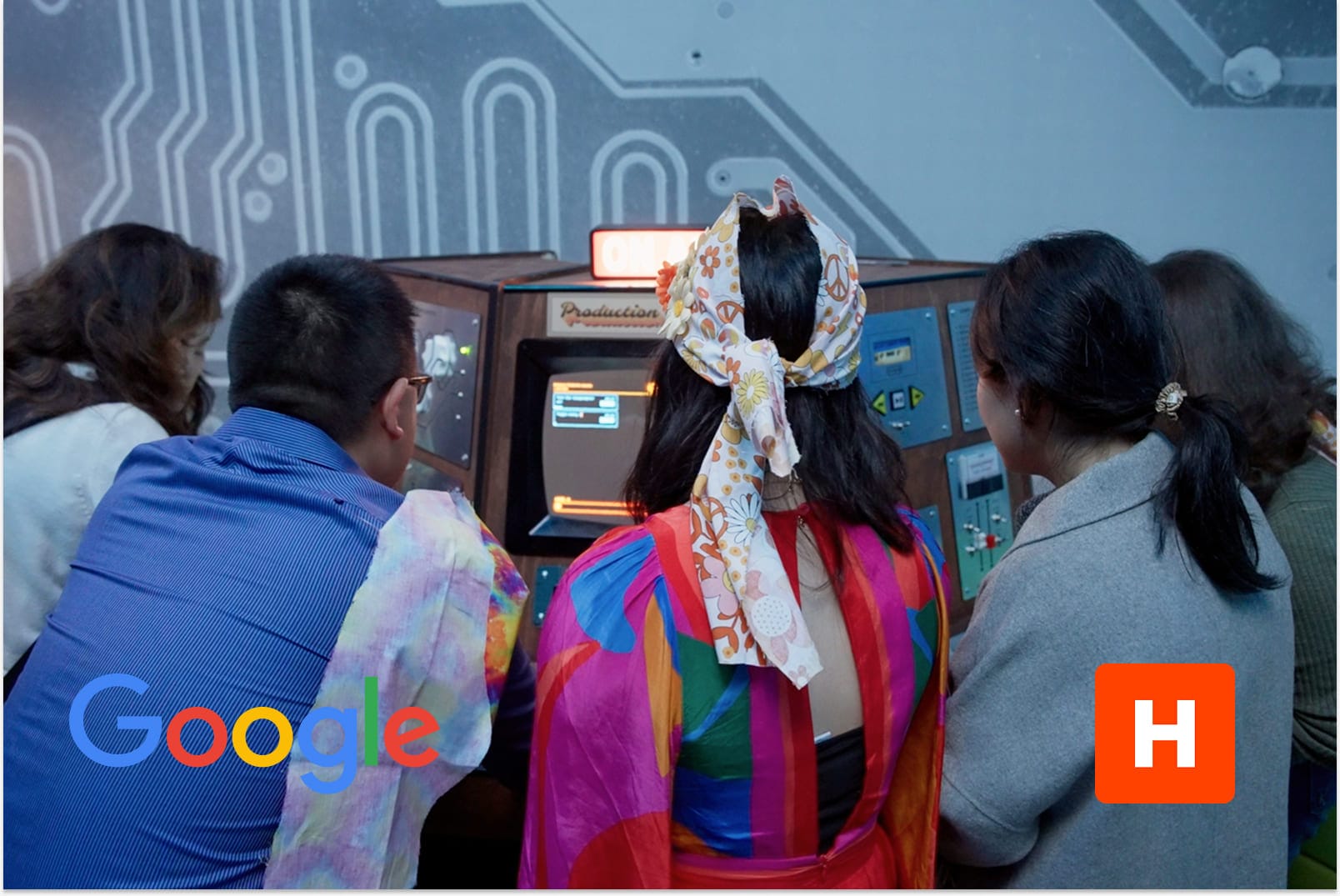
Puzzle #2: The Production Console
– Chaotic, social, repeatable –
This one was designed to be chaotic in the best possible way. And it was a complex build that spanned fabrication to intricate video game programming.
"Everything that went into it is worth it 10 times over when you see people have fun." — Allie Laabs, Production Console software designer
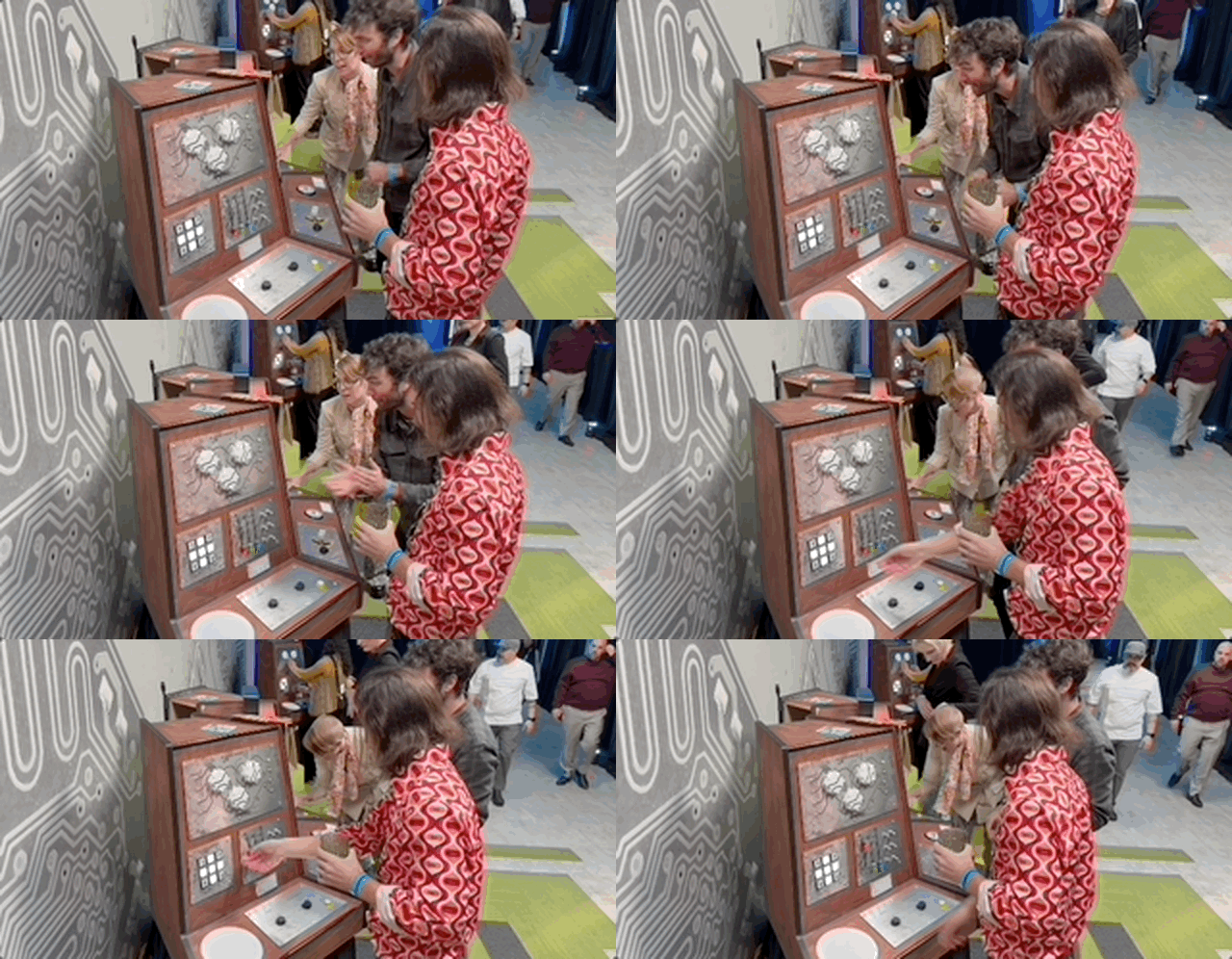
The Production Console requires three players to hold buttons simultaneously just to start, so guests had to recruit people before they could even begin! #collaboration
Rapid-fire rounds kept energy high without demanding a big time commitment. It was also the only installation guests could return to after having solved it already to play again. And they did 🙂.
Puzzle #3: The Broadcast Map
– Drift-in, drift-out, spectacular visuals –
A giant illuminated map of broadcast towers whose range guests controlled using physical knobs and buttons.
Designer Scott Gillies built the puzzle around one core challenge: how do you get people to discover the elements in exactly the right order so the aha moment actually lands?
"You don't want your puzzle to be so hard that nobody can solve it. That's just a bad puzzle." — Scott Gillies, Broadcast Map puzzle designer
Anchoring the main dining and live music room, The Broadcast Map was visible from the entryway, pulling people in without a single sign. Tactile builds do that. They create curiosity before anyone knows what they're looking at. Designed for up to six players and countless spectators.
The Reward System: Stamps, a Reveal, and a Prize
Each solve unlocked something physical.
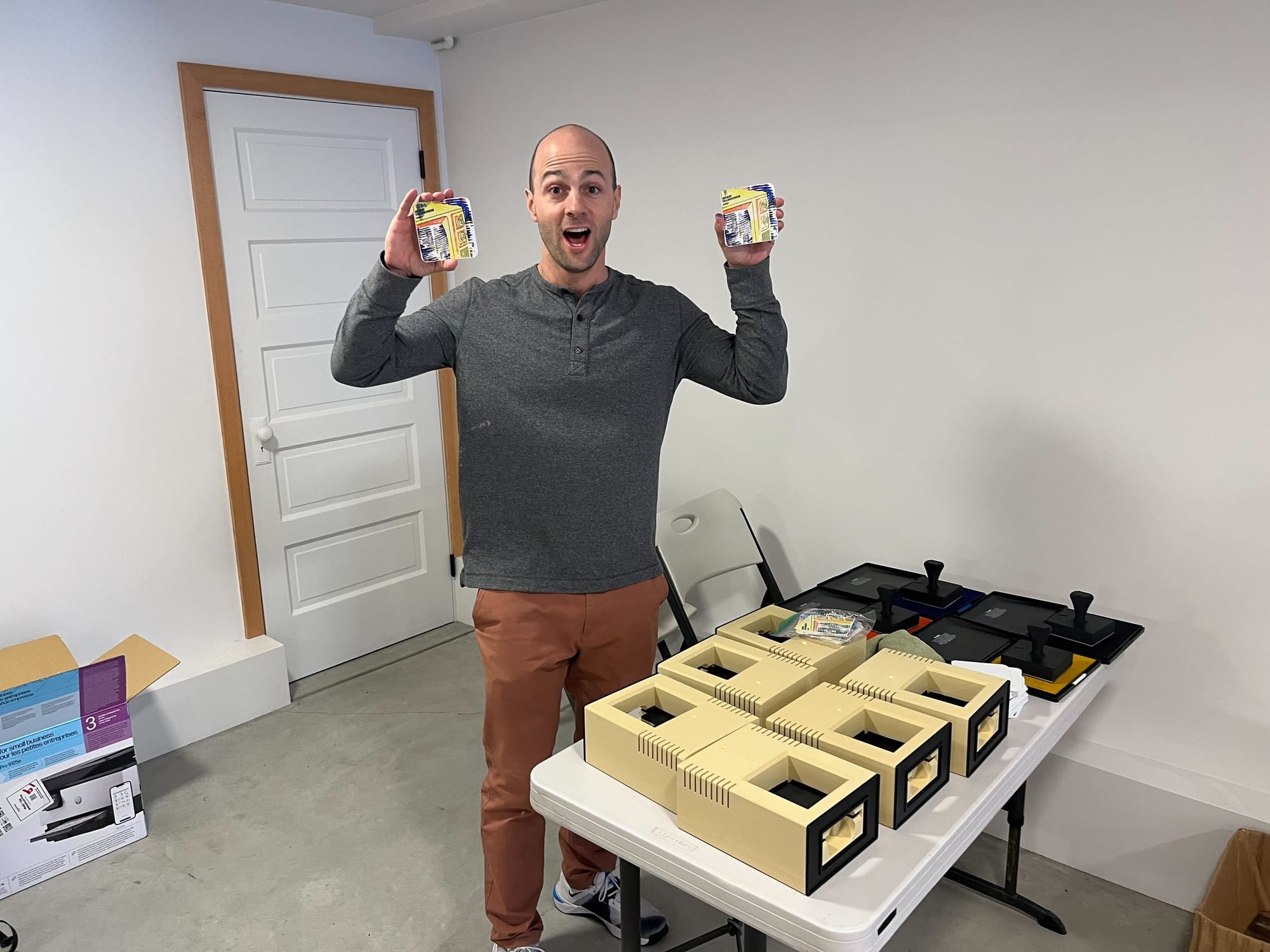
After completing a machine, an immersive actor used a custom-built stamp machine to mark the guest's floppy disc with their "recorded session data." Three machines, three stamps. The extra fun part was that each one was a fragment of a bigger picture...
Collect all three, and the image snapped into focus: a vintage TV displaying The Secret Transmission logo. Entirely earned, with the satisfaction of watching the pieces click together as the payoff.
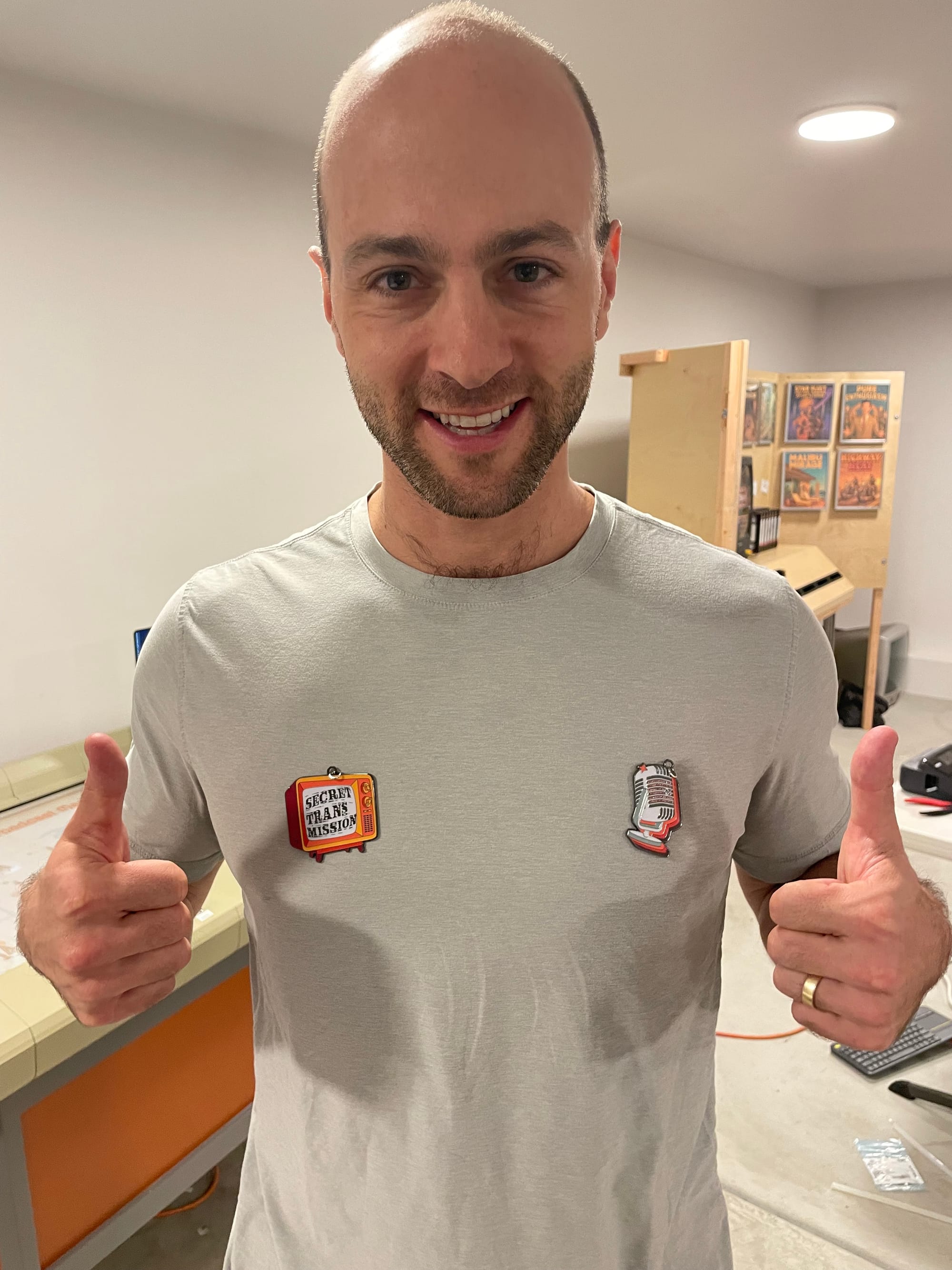
Guests who cracked all three also received an exclusive collectible pin — a keepsake that marked them as one of the few who completed the full transmission.
Three separate puzzle moments became one unified narrative arc. The pin made finishing feel like an achievement worth showing off.
How We Shaped Participation
Every guest's experience started the same way: a tap on the shoulder and a coaster.
🎭 Immersive actors
Immersive actors stationed at each machine were the real onboarding engine. They handed guests a coaster, pulled them into the story (the Chaos Manifesto, the rogue broadcast manager, and the deadline), and sent them off with just enough context to get curious. The rest was up to them.
⏳ Open timeline
Guests could jump into one installation, two, or all three, on their own timeline. The experience was designed to reward however much someone wanted to give. And most who started wanted to finish.
💯 Straightforward reward system
Instead of a leaderboard, it was a straightforward reward system. As we mentioned, players would solve a puzzle and earn a stamp. Once they solved all three, they received a final stamp, officially earned their Quality Assurance prize pin, and stopped the Chaos Manifesto! Completion always felt both within reach and rewarding for players.
What Surprised Us
"I was only going to stay for 20 minutes, but then I got sucked in by the puzzles!"
We heard this across both nights. Guests stayed longer than planned, reconnected with familiar colleagues, and met new ones over a shared challenge.
The organic word-of-mouth caught us by surprise, resulting the Secret Transmission becoming a throughline for the whole party.
That's the goal. When a great interactive event feels effortless. However, the behind-the-scenes work is anything but!
The Invisible Work Behind the Scenes
With 2,000 anticipated guests playing on two sets of three installations, we made sure to model everything: average session time, sessions per hour, reset cycles, rotation logic, and how to keep traffic flowing evenly across all three installations. Multi-night quality control meant night two had to feel as sharp as night one, even after hundreds of interactions.
And then there were the problems nobody puts in a brief. Dun, dun, dun...
During the Production Console build, static electricity from play testers touching buttons and knobs was causing the electronics to bust.
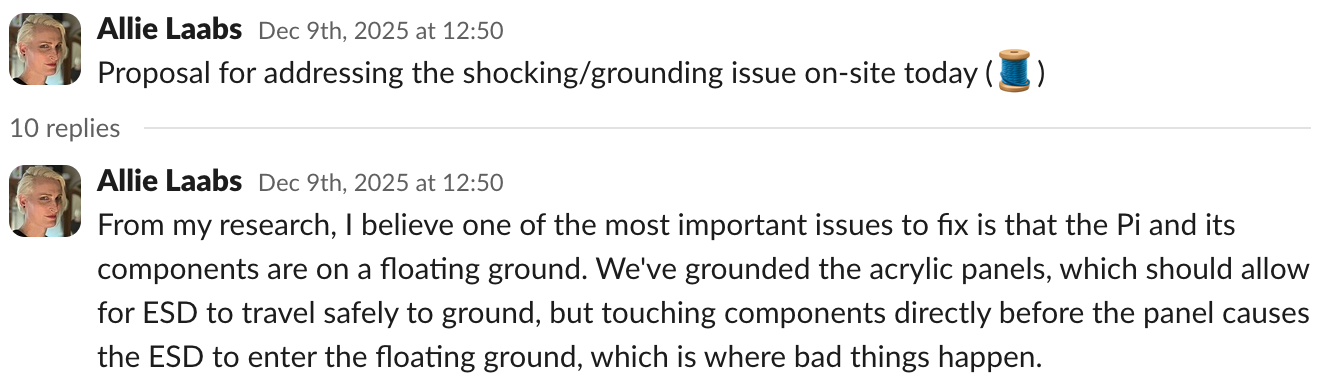
With some experimentation on an incredibly short timeline, we ended up finding a solution that worked for the party! Unglamorous work, but exactly the kind that separates a team of expert creators from others.
That's one thing that never changes. Building custom hardware for live events means solving issues that no controlled setting prepares you for.
But when the logistics are airtight and the hardware holds up, the experience feels organic, and guests never notice the seams.
What Event Planners Should Take Away
When an interactive experience is designed well, guests self-direct. They engage at their comfort level, pull in the people around them, and move naturally through the space.
Genuinely fun participation earns higher engagement than required participation. And when the design is doing its job, the logistics run themselves, leaving planners free to focus on everything else.
That's our goal every time: a seamless experience for guests, and an easy win for the people who planned it.
Let's Build Something
Whether you're hosting 100 people or 2,000, the principles are the same: layered participation, intentional flow, and a narrative that pulls people in.
Handstand designs the interactive experience layer that makes your event unforgettable.
Get a quote for The Secret Transmission today!
More Reading
Check out the full Studio 37 case study for more.
Read the full Studio 37 case study.
Frequently Asked Questions about Large-Scale Interactive Event Experiences
What is an interactive event experience?
In our terms, it is an activity built into a larger event like a party, an offsite, or a holiday celebration, that guests actively participate. For example, we design gamified experiences in which guests solve puzzles, play games, or work through a storyline together.
How do you design an activity that works for thousands of guests at once?
We design an activity that works for thousands of attentees by modeling throughput before the event. We model average session time, how many people can engage at once, what happens when someone gets stuck, and how a station resets between groups. Building multiple installations aimed at different engagement levels — quick wins for some guests, deeper puzzles for others — also spreads a large crowd out naturally instead of creating one bottleneck.
What makes a holiday party memorable beyond food and drinks?
A reason to talk to people you wouldn't normally talk to. A shared puzzle, a mission, or a collectible reward gives guests something to do together and talk about afterwards.
How much lead time do you need for a large custom event installation?
Plan on at least 2 months for a fully custom, large-scale installation for 200 or more guests. That timeline covers design, fabrication, and playtesting. Smaller, less customized activations can move faster, closer to 2 to 6 weeks.
Can an interactive experience work for both small and large guest counts?
Yes — the same design principles apply whether it's 100 people or 2,000. What changes is the number of installations and how much redundancy you build in, not the core idea of a narrative that pulls people in and rewards participation.



